Modern Farming Equipment Guide: Harvesters, Uses, and Lifespan
Introduction Modern agriculture has changed significantly over the past few decades. Farming is no longer dependent only on manual labor or traditional tools. Today, machines play a central role in increasing productivity, reducing time, and improving crop quality. Among these machines, harvesters are one of the most important innovations in modern farming. A harvester is designed to perform multiple tasks such as cutting crops, separating grains, and cleaning them in a single operation. This has made harvesting faster and more efficient compared to traditional methods. With the global demand for food increasing, modern farming equipment has become essential for both small and large farms. This guide explains different types of harvesters, their uses, benefits, limitations, lifespan, and how farmers can choose and maintain them effectively.
What Are Modern Harvesters?
Harvesters, especially combine harvesters, are agricultural machines used to collect mature crops from fields. They combine three main functions:
- Reaping (cutting the crop)
- Threshing (separating grain from stalks)
- Winnowing (removing unwanted material)
Instead of using separate tools or manual labor, a combine harvester completes all steps in one machine. This saves time and reduces crop loss during harvesting.
Modern combine harvesters are widely used for crops like wheat, rice, maize, barley, soybeans, and oats.
Types of Harvesters in Modern Farming
Different farming conditions require different types of harvesters. Below are the main categories:
1. Combine Harvesters
These are the most common and widely used machines in grain farming. They perform cutting, threshing, and cleaning in one pass.
2. Self-Propelled Harvesters
These machines have their own engine and can move independently across fields. They are suitable for large-scale commercial farming.
3. Tractor-Mounted Harvesters
These are attached to tractors and are more affordable than self-propelled machines. They are commonly used by small and medium farmers.
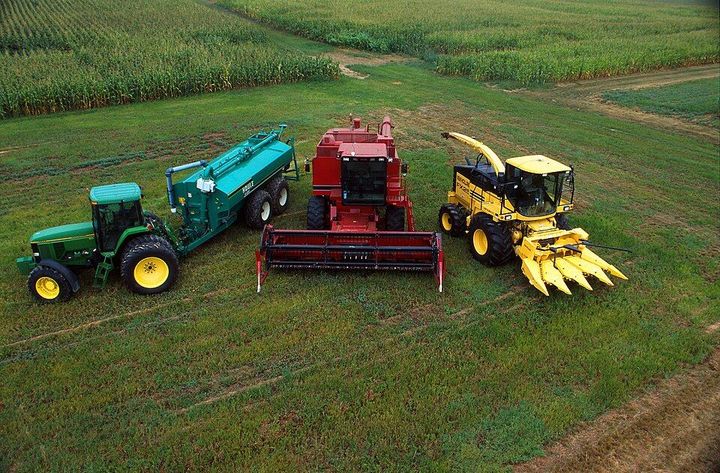
4. Forage Harvesters
These are used for cutting grass and crops used as animal feed, such as silage and fodder crops.
5. Specialized Crop Harvesters
These include machines designed for specific crops like sugarcane, cotton, or potatoes.
Uses of Harvesters in Agriculture
Modern harvesters are used in multiple farming operations:
- Harvesting cereal crops like wheat and rice
- Reducing manual labor requirements
- Increasing harvesting speed
- Minimizing crop wastage
- Improving grain quality
- Supporting large-scale commercial farming
By combining multiple processes, harvesters significantly reduce the time needed for harvesting, especially during peak seasons.
Benefits of Modern Harvesters
Harvesters provide several advantages that make them essential in modern agriculture.
1. Time Efficiency
Harvesting that used to take days or weeks can now be completed in hours.
2. Reduced Labor Cost
Fewer workers are needed, which lowers overall farming expenses.
3. Higher Productivity
Machines can work continuously for long hours, improving output.
4. Better Crop Quality
Modern machines reduce damage to grains during harvesting.
5. Fuel and Resource Efficiency
Advanced models are designed to consume less fuel while delivering higher output.
6. Precision Farming Support
Modern harvesters use sensors and GPS systems for better accuracy.
Limitations of Harvesters
Despite their benefits, harvesters also have some limitations:
1. High Initial Cost
Buying a harvester can be expensive for small farmers.
2. Maintenance Requirements
Regular servicing is necessary to ensure smooth operation.
3. Not Suitable for Small Fields
Large machines may not work efficiently in small or uneven fields.
4. Skilled Operation Needed
Operators require training to handle modern systems.
5. Weather Dependence
Heavy rain or muddy fields can reduce efficiency.
Lifespan of Harvesters
The lifespan of a modern combine harvester depends on usage, maintenance, and working conditions.
- Average lifespan: 10 to 20 years
- Light usage farms: up to 20 years
- Heavy commercial usage: around 10–12 years
Factors affecting lifespan:
- Usage intensity (hours per season)
- Maintenance practices
- Quality of machine build
- Soil and weather conditions
- Storage methods during off-season
Proper maintenance can significantly extend machine life and reduce breakdown costs.
Key Features to Consider in Modern Harvesters
When selecting a harvester, farmers should consider the following features:
1. Engine Power
Higher horsepower is better for large farms.
2. Cutting Width
Wider cutting width increases efficiency.
3. Grain Tank Capacity
A larger tank reduces frequent unloading.
4. Fuel Efficiency
Important for reducing long-term operational cost.
5. Technology Integration
Features like GPS, sensors, and automation improve accuracy.
6. Ease of Maintenance
Machines with easily available spare parts are more practical.
Comparison Table: Harvester Types Overview
| Feature | Combine Harvester | Tractor-Mounted Harvester | Self-Propelled Harvester |
|---|---|---|---|
| Operation | Multi-function | Tractor dependent | Independent machine |
| Cost | High | Moderate | Very high |
| Efficiency | Very high | Medium | Very high |
| Field size suitability | Large farms | Small to medium farms | Large commercial farms |
| Maintenance | Moderate | Low | High |
| Flexibility | High | Medium | High |
Latest Trends in Modern Harvesting Equipment
Modern agriculture is evolving with new technologies:
1. Precision Farming
GPS-based systems help improve accuracy and reduce waste.
2. Automation
Some harvesters now operate with minimal human control.
3. Smart Sensors
Machines detect crop density and adjust settings automatically.
4. Data Integration
Farmers can track performance data in real time.
5. Fuel-Efficient Engines
New engines reduce emissions and operating costs.
6. AI-Based Monitoring
Artificial intelligence helps predict maintenance needs.
These advancements are making farming more efficient and sustainable.
Top Companies Manufacturing Harvesters
Several global companies lead in agricultural machinery production:
1. John Deere
Known for advanced and durable farming equipment.
Website: https://www.deere.com
2. CNH Industrial (Case IH & New Holland)
Provides a wide range of harvesting solutions.
Website: https://www.cnhindustrial.com
3. CLAAS
Specializes in high-performance combine harvesters.
Website: https://www.claas.com
4. Kubota
Popular for compact and medium-scale farming machines.
Website: https://www.kubota.com
5. Mahindra & Mahindra (India)
Offers affordable agricultural machinery for Indian farmers.
Website: https://www.mahindra.com
How to Choose the Right Harvester
Selecting the right machine depends on several factors:
Checklist for farmers:
- Size of land
- Type of crop
- Budget available
- Fuel availability
- Maintenance support in the region
- Availability of spare parts
- Labor availability
Practical advice:
Small farmers should consider tractor-mounted models, while large farms benefit more from self-propelled combine harvesters.
Tips for Maintenance and Best Use
Proper maintenance improves efficiency and lifespan.
Maintenance tips:
- Clean the machine after every use
- Regularly check oil and filters
- Store in a dry and covered space
- Replace worn-out parts immediately
- Follow manufacturer service schedules
- Train operators properly
Usage tips:
- Avoid overloading the machine
- Operate only in suitable weather conditions
- Adjust settings based on crop type
- Inspect field conditions before harvesting
Frequently Asked Questions (FAQs)
1. What is the main purpose of a harvester?
It is used to cut and collect crops efficiently while reducing manual labor.
2. How long does a combine harvester last?
On average, it lasts between 10 to 20 years depending on usage and maintenance.
3. Are harvesters suitable for small farms?
Yes, but tractor-mounted models are better for small farms.
4. What crops can be harvested using machines?
Wheat, rice, maize, barley, soybeans, and more.
5. Is maintenance expensive?
It depends on usage, but regular servicing reduces long-term costs.
Conclusion
Modern farming equipment, especially harvesters, has transformed agriculture by making it faster, more efficient, and less labor-intensive. These machines help farmers save time, improve productivity, and reduce crop losses.
However, choosing the right machine and maintaining it properly is essential for long-term benefits. While technology continues to improve with automation and smart systems, the core purpose remains the same—making farming more productive and sustainable.
Understanding how harvesters work, their lifespan, and their limitations helps farmers make informed decisions and improve overall agricultural efficiency.