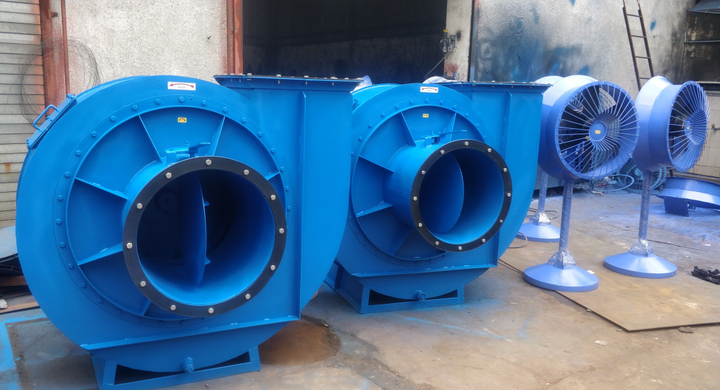
What Is an Industrial Blower?
An industrial blower is an electromechanical device that increases the pressure and velocity of air or gas for specific industrial processes. It typically consists of a motor, impeller, and housing that work together to generate airflow.
Blowers are often considered intermediate devices between fans and compressors because they provide moderate pressure and high airflow.
Working Principle of Industrial Blowers
Industrial blowers operate by converting mechanical energy into kinetic energy, which moves air or gas through a system.
Basic Process
-
Air Intake – Air or gas enters the blower through an inlet
-
Compression – Rotating impellers increase air velocity and pressure
-
Discharge – Pressurized air exits through an outlet
The rotation of impellers creates centrifugal force or displacement, depending on the blower type, which drives airflow efficiently.
Benefits of Industrial Blowers
1. Efficient Airflow Management
They provide controlled and consistent airflow for various industrial processes.
2. Versatile Applications
Used in ventilation, cooling, dust collection, drying, and combustion systems.
3. Improved Workplace Safety
Help remove harmful gases, dust, and fumes from work environments.
4. Continuous Operation
Designed for long operational hours in demanding conditions.
5. Energy Optimization
Modern systems include variable speed controls and energy-efficient designs.
Limitations of Industrial Blowers
While useful, industrial blowers also have certain drawbacks:
-
High Initial Investment
-
Energy Consumption in large-scale operations
-
Noise Levels depending on design
-
Maintenance Requirements such as lubrication and part replacement
-
Space Requirements for large systems
Understanding these limitations helps in selecting the right system for specific needs.
Types of Industrial Blowers
Industrial blowers are categorized based on their design and working mechanism.
1. Centrifugal Blowers
-
Use rotating impellers to increase air velocity
-
Suitable for high-pressure applications
-
Common in HVAC and dust collection
2. Axial Blowers
-
Air flows parallel to the shaft
-
High airflow but lower pressure
-
Used in ventilation and cooling
3. Positive Displacement Blowers
-
Trap and move air in fixed volumes
-
Provide constant airflow
-
Used in pneumatic conveying
4. Regenerative Blowers
-
Use a side channel to build pressure
-
Suitable for low-flow, high-pressure applications
5. Screw or Helical Blowers
-
Use rotating screws for continuous airflow
-
Energy-efficient for large-scale operations
Comparison Table: Types of Industrial Blowers
| Type | Pressure Level | Airflow Volume | Efficiency | Common Uses |
|---|
| Centrifugal | High | Medium | High | Dust collection, HVAC |
| Axial | Low | High | Moderate | Ventilation, cooling |
| Positive Displacement | Medium | Constant | High | Conveying systems |
| Regenerative | Medium | Low | Moderate | Vacuum systems |
| Screw Blowers | High | High | Very High | Industrial processes |
Latest Trends and Innovations
1. Energy-Efficient Designs
New blower systems use advanced motors and aerodynamics to reduce power consumption.
2. Variable Speed Drives (VSD)
Allow blowers to adjust speed based on demand, improving efficiency.
3. Smart Monitoring Systems
Sensors and IoT-based tools track performance and detect faults in real time.
4. Noise Reduction Technology
Improved designs minimize operational noise.
5. Compact and Modular Systems
Modern blowers are designed to save space and allow easy expansion.
Key Features to Consider
When evaluating industrial blowers, consider the following:
-
Airflow capacity (CFM or m³/h)
-
Pressure requirements
-
Energy efficiency
-
Material and build quality
-
Noise levels
-
Operating environment (temperature, dust, moisture)
-
Maintenance needs
-
Compatibility with existing systems
Top Companies and Solutions
Some widely recognized industrial blower manufacturers include:
-
Atlas Copco
-
Gardner Denver
-
Kaeser Compressors
-
Aerzen
-
Howden Group
These companies offer a range of blower technologies, including centrifugal, rotary lobe, and screw blowers. When comparing options, review specifications, certifications, and application suitability.
How to Choose the Right Industrial Blower
Selecting the right blower involves understanding your operational needs.
Step-by-Step Checklist
-
Identify application (ventilation, cooling, conveying, etc.)
-
Determine airflow and pressure requirements
-
Evaluate environmental conditions
-
Compare blower types
-
Check energy efficiency ratings
-
Review installation space
-
Consider maintenance and lifecycle cost
Installation Considerations
-
Proper duct design for airflow efficiency
-
Correct positioning to avoid airflow restrictions
-
Adequate vibration control
-
Compliance with safety standards
Proper installation ensures optimal performance and reduces long-term issues.
Tips for Best Use and Maintenance
Maintenance Checklist
-
Clean filters and air passages regularly
-
Inspect impellers and moving parts
-
Lubricate bearings as required
-
Monitor vibration and noise levels
-
Check electrical connections
-
Schedule periodic professional servicing
Consistent maintenance helps extend equipment life and maintain efficiency.
FAQs
1. What is the main purpose of an industrial blower?
It is used to move air or gas efficiently for processes like ventilation, cooling, and material handling.
2. How is a blower different from a fan?
Blowers provide higher pressure and controlled airflow, while fans mainly circulate air.
3. Which type of blower is most commonly used?
Centrifugal blowers are widely used due to their efficiency and versatility.
4. Can industrial blowers operate continuously?
Yes, most are designed for continuous operation in industrial environments.
5. How do I know the right size blower?
It depends on airflow requirements, pressure levels, and application type.
6. Are industrial blowers energy-efficient?
Modern blowers with variable speed drives and advanced designs are more energy-efficient.
Conclusion
Industrial blowers are essential components in modern industrial systems, enabling efficient airflow management across a wide range of applications. Their ability to handle demanding environments and deliver consistent performance makes them a practical choice for industries seeking reliable solutions.
Understanding the different types, working principles, and key features helps in selecting the right blower for specific needs. While factors such as cost, maintenance, and energy use should be considered, a well-chosen blower system can improve efficiency, safety, and overall operational performance.
As technology continues to evolve, industrial blowers are becoming more efficient, smarter, and adaptable—making them an important part of sustainable and optimized industrial operations.