What Are Compressed Air Dryers?
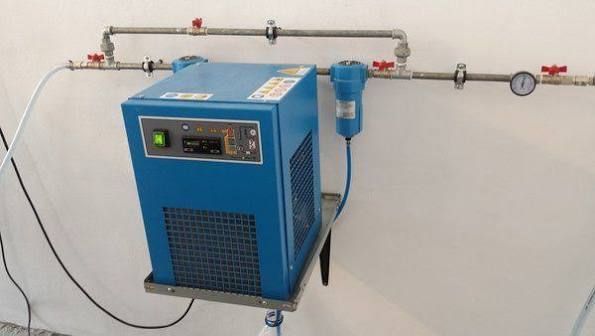
Compressed air dryers are devices designed to remove water vapor from compressed air. During the compression process, air temperature rises, allowing it to hold more moisture. As the compressed air cools while traveling through pipes, this moisture condenses into liquid water.
If left untreated, moisture can:
-
Cause corrosion inside pipelines
-
Damage pneumatic tools
-
Contaminate finished products
-
Freeze in outdoor air lines
-
Reduce efficiency of production equipment
An air compressor dryer removes this moisture before it enters the distribution system, ensuring cleaner and more reliable compressed air.
Why Moisture Removal Matters
Moisture may seem harmless, but in industrial systems it can create expensive operational problems.
Common Problems Caused by Moisture
-
Rust inside pipelines
-
Valve failure
-
Instrument inaccuracies
-
Poor paint finishes
-
Product contamination
-
Increased maintenance
-
Air leaks due to corrosion
-
Reduced equipment lifespan
Even small amounts of moisture can affect sensitive manufacturing processes.
How Compressed Air Dryers Work
Although different dryer technologies operate differently, the objective remains the same: reduce the dew point of compressed air so moisture does not condense inside the system.
The typical process includes:
-
Air leaves the compressor.
-
Moisture begins forming as air cools.
-
The dryer removes moisture.
-
Filters capture oil and particles.
-
Dry, clean air enters the distribution network.
Many compressed air dryer systems also include aftercoolers, moisture separators, and filtration units for improved air quality.
Types of Compressed Air Dryers
Several dryer technologies are available depending on application requirements.
| Dryer Type | Best For | Typical Dew Point | Advantages | Limitations |
|---|
| Refrigerated Dryer | General manufacturing | Around 35–50°F | Affordable and reliable | Not suitable for extremely dry air |
| Desiccant Dryer | Pharmaceuticals, electronics | Up to -100°F | Very dry air | Higher operating cost |
| Membrane Dryer | Remote locations | Moderate | No electricity required in some models | Lower flow capacity |
| Deliquescent Dryer | Temporary installations | Moderate | Simple operation | Requires desiccant replacement |
Among these, refrigerated dryers remain the most widely used in manufacturing.
For example, a 50 cfm refrigerated air dryer is commonly selected for small workshops and medium-sized compressed air systems where moderate moisture removal is sufficient.
Main Components of a Compressed Air Dryer System
Most systems include several important components.
Air Compressor
Produces compressed air.
Aftercooler
Reduces air temperature after compression.
Moisture Separator
Removes condensed water before drying begins.
Dryer Unit
Eliminates remaining moisture.
Filters
Capture oil aerosols and fine particles.
Drain System
Automatically removes collected water.
Distribution Piping
Many facilities install 3 4 aluminum air line piping because aluminum offers corrosion resistance, lightweight installation, and smooth airflow compared to traditional steel piping.
Benefits of Compressed Air Dryers
Installing properly sized industrial compressed air dryers provides numerous operational advantages.
Improved Equipment Reliability
Dry air reduces corrosion and minimizes wear on valves, cylinders, and pneumatic tools.
Better Product Quality
Moisture-free air helps improve consistency in painting, packaging, electronics manufacturing, and food production.
Lower Maintenance Costs
Dry systems experience fewer breakdowns and reduced replacement of damaged components.
Longer Equipment Life
Removing moisture protects expensive compressors and downstream equipment.
Improved Energy Efficiency
Well-maintained dryers reduce pressure losses across the system.
Cleaner Air Supply
Combined with filtration, dryers remove contaminants that affect sensitive equipment.
Limitations of Compressed Air Dryers
Although beneficial, dryers also have limitations.
| Limitation | Explanation |
|---|
| Initial investment | Quality dryers increase project cost |
| Energy consumption | Some dryers require continuous power |
| Regular maintenance | Filters and drains need inspection |
| Incorrect sizing | Oversized or undersized dryers reduce efficiency |
| Operating conditions | Ambient temperature affects performance |
Understanding these limitations helps improve long-term performance.
Applications Across Industries
Compressed air dryers are used in many industries.
Manufacturing
Supports automation equipment and pneumatic tools.
Automotive
Improves painting quality and assembly operations.
Food Processing
Helps reduce moisture contamination during packaging.
Pharmaceutical Production
Provides extremely dry air for clean manufacturing environments.
Electronics
Protects moisture-sensitive components.
Textile Industry
Supports air-powered machinery.
Chemical Processing
Maintains consistent air quality throughout production.
Key Features to Consider
When comparing compressed air dryers, consider the following features.
Flow Capacity
Measured in cubic feet per minute (CFM).
The dryer must match compressor output.
For example, a 10 hp rotary screw air compressor with dryer requires a dryer capable of handling its airflow without creating excessive pressure loss.
Pressure Rating
Ensure compatibility with operating system pressure.
Pressure Dew Point
Lower dew points provide drier air but often require more advanced technology.
Automatic Drain
Automatically removes collected moisture without operator intervention.
Energy Efficiency
Modern dryers use cycling refrigeration systems that consume less electricity.
Filtration Compatibility
Integrated filtration improves air quality.
Digital Controls
Many new dryers include:
-
LCD displays
-
Alarm notifications
-
Maintenance reminders
-
Remote monitoring
Comparison of Refrigerated and Desiccant Dryers
| Feature | Refrigerated Dryer | Desiccant Dryer |
|---|
| Air Quality | Good | Excellent |
| Operating Cost | Lower | Higher |
| Energy Use | Moderate | Higher |
| Maintenance | Low | Moderate |
| Best Application | General industry | Critical environments |
| Typical Dew Point | 35–50°F | Up to -100°F |
Latest Trends in Compressed Air Drying
Modern compressed air systems continue to evolve.
Smart Monitoring
Sensors monitor:
-
Temperature
-
Dew point
-
Pressure
-
Energy consumption
Operators receive alerts before failures occur.
Energy Recovery
Some systems recover waste heat from compressors for facility heating.
Variable-Speed Operation
Variable-speed refrigeration systems reduce energy use during periods of lower demand.
IoT Integration
Remote monitoring platforms allow maintenance teams to monitor dryer performance from anywhere.
Environmentally Friendly Refrigerants
Manufacturers increasingly use refrigerants with lower environmental impact.
Top Companies Offering Compressed Air Drying Solutions
Many established manufacturers provide compressed air drying equipment for industrial applications.
| Company | Known For |
|---|
| Atlas Copco | Wide range of industrial dryers |
| Ingersoll Rand | Rotary screw compressors and dryers |
| Kaeser Compressors | Energy-efficient compressed air systems |
| Donaldson | Filtration and air treatment |
| Parker Hannifin | Industrial air purification |
| SPX FLOW | Process air treatment solutions |
| Quincy Compressor | Industrial compressor packages |
| Sullair | Compressed air systems for manufacturing |
When comparing suppliers, evaluate:
-
Flow capacity
-
Dew point
-
Energy efficiency
-
Maintenance requirements
-
Warranty
-
Availability of replacement parts
How to Choose the Right Compressed Air Dryer
Selecting the right dryer depends on operational needs rather than simply purchasing the largest model.
Step 1: Determine Air Flow
Measure compressor output in CFM.
Step 2: Identify Required Air Quality
Some industries require extremely dry air while others only require moisture reduction.
Step 3: Consider Operating Conditions
Evaluate:
-
Ambient temperature
-
Humidity
-
Installation location
-
Daily operating hours
Step 4: Match Pressure Requirements
Choose equipment compatible with your compressor pressure.
Step 5: Evaluate Operating Costs
Consider:
-
Electricity usage
-
Maintenance
-
Replacement filters
-
Service intervals
Step 6: Plan for Future Expansion
If production may increase, select a system with reasonable growth capacity.
Maintenance Tips for Better Performance
Routine maintenance improves reliability and extends equipment life.
Maintenance Checklist
-
Inspect filters regularly.
-
Drain moisture collection systems.
-
Check refrigerant performance.
-
Monitor pressure drop.
-
Clean condenser coils.
-
Inspect drain valves.
-
Replace desiccant when required.
-
Check air leaks throughout the system.
-
Review dew point readings.
-
Follow manufacturer maintenance schedules.
Preventive maintenance often costs significantly less than emergency repairs.
Common Mistakes to Avoid
Many compressed air problems result from incorrect system design.
Avoid these common mistakes:
-
Choosing a dryer that is too small
-
Ignoring pressure loss
-
Skipping filter maintenance
-
Installing poor-quality piping
-
Not draining condensate
-
Operating beyond rated capacity
-
Ignoring dew point measurements
-
Delaying preventive maintenance
Example of a Typical Compressed Air System
A medium-sized manufacturing facility might include:
-
Rotary screw compressor
-
10 hp rotary screw air compressor with dryer
-
Moisture separator
-
Refrigerated dryer
-
Coalescing filters
-
Activated carbon filter
-
3 4 aluminum air line distribution network
-
Automatic drains
-
Pressure regulators
-
Pneumatic equipment
Such a system helps deliver consistent, clean compressed air throughout the facility.
Quick Selection Checklist
Before purchasing an air compressor dryer, ask the following questions:
| Question | Yes/No |
|---|
| Is airflow capacity sufficient? | □ |
| Does the dryer match system pressure? | □ |
| Is the required dew point achieved? | □ |
| Are maintenance requirements acceptable? | □ |
| Does it fit available installation space? | □ |
| Is energy efficiency considered? | □ |
| Are replacement parts readily available? | □ |
| Can the system expand in the future? | □ |
Frequently Asked Questions
What is the purpose of compressed air dryers?
Compressed air dryers remove moisture from compressed air to prevent corrosion, equipment damage, and contamination in industrial systems.
Are industrial compressed air dryers necessary?
In most industrial applications, yes. Dry compressed air improves reliability, protects equipment, and helps maintain consistent production quality.
What size air compressor dryer should I choose?
The correct size depends on compressor airflow (CFM), operating pressure, ambient conditions, and required dew point. The dryer should be sized to handle the full airflow without excessive pressure drop.
What is a 50 cfm refrigerated air dryer used for?
A 50 cfm refrigerated air dryer is commonly used with small to medium compressed air systems in workshops, maintenance facilities, and light manufacturing where moderate moisture removal is required.
Can compressed air dryers reduce maintenance costs?
Yes. Removing moisture helps reduce corrosion, extends equipment life, and minimizes unexpected repairs, which can lower long-term maintenance expenses.
Why are aluminum air lines becoming popular?
A 3 4 aluminum air line is lightweight, corrosion-resistant, and easy to install. It also provides smooth airflow with less pressure loss compared to many traditional piping materials.
How often should compressed air dryers be serviced?
Maintenance schedules vary by manufacturer and operating conditions, but filters, drains, and system performance should be inspected regularly to ensure reliable operation.
Conclusion
Compressed air quality has a direct impact on industrial productivity, equipment reliability, and maintenance costs. Moisture may appear insignificant, but over time it can lead to corrosion, system failures, inconsistent product quality, and increased operating expenses. By using properly sized compressed air dryers, facilities can deliver clean, dry air throughout their operations and improve the performance of pneumatic equipment and manufacturing processes.
Whether selecting a simple air compressor dryer for a small workshop or designing large-scale compressed air dryer systems for industrial production, it is important to consider airflow requirements, dew point, energy efficiency, maintenance needs, and future expansion. Pairing the right dryer with quality piping, such as a 3 4 aluminum air line, and performing routine maintenance can further enhance system performance.
As industrial technologies continue to advance, newer industrial compressed air dryers offer improved energy efficiency, smarter monitoring capabilities, and more sustainable operation. Understanding these options allows businesses to make informed decisions that support reliable compressed air systems and long-term operational performance.