Complete Guide to Industrial Chillers for Homes, Buildings, and Manufacturing Facilities
Introduction Temperature control plays an important role in residential, commercial, and industrial environments. Whether it is keeping manufacturing equipment operating efficiently, maintaining comfortable indoor conditions in large buildings, or supporting specialized industrial processes, cooling systems are essential. Among the most reliable cooling technologies available today are industrial chillers. Industrial chillers are designed to remove heat from liquids or equipment and transfer that heat away from the system. Unlike standard air conditioners, chillers can handle much larger cooling loads and are commonly used in manufacturing plants, data centers, hospitals, food processing facilities, pharmaceutical production, commercial buildings, and even some large residential applications. As industries continue to focus on energy efficiency, sustainability, and automation, industrial chillers have evolved with advanced monitoring systems, intelligent controls, and environmentally friendly refrigerants. Understanding how these systems work can help homeowners, facility managers, and industrial professionals make informed decisions when selecting the right cooling solution. This guide explains the different types of industrial chillers, their applications, advantages, limitations, key features, maintenance practices, and current industry trends.
What Are Industrial Chillers?
Industrial chillers are cooling systems that remove heat from a liquid, typically water or a water-glycol mixture. The cooled liquid is then circulated through equipment, machinery, or building systems to absorb unwanted heat before returning to the chiller to repeat the cooling cycle.
Unlike residential air conditioners that mainly cool indoor air, industrial chillers provide process cooling or centralized cooling for larger systems.
Common applications include:
Manufacturing facilities
Office buildings
Hospitals
Hotels
Shopping malls
Plastic processing plants
Chemical industries
Pharmaceutical manufacturing
Food and beverage processing
Data centers
Large residential buildings
How Industrial Chillers Work
Most industrial chillers follow a refrigeration cycle consisting of four primary components:
Compressor
Condenser
Expansion valve
Evaporator
The process generally works as follows:
Heat is absorbed from process water.
Refrigerant removes the heat inside the evaporator.
The compressor increases refrigerant pressure.
The condenser releases heat to air or water.
The cooled refrigerant returns to continue the cycle.
This continuous process provides consistent temperature control.
Common Applications of Industrial Chillers
Industrial chillers support many industries by maintaining precise operating temperatures.
Types of Industrial Chillers
Different facilities require different cooling solutions.
Air-Cooled Chillers
Air-cooled chillers use ambient air to remove heat from refrigerant.
Advantages:
Easier installation
Lower maintenance
No cooling tower required
Suitable for outdoor installation
Limitations:
Lower efficiency in hot climates
Higher operating noise
Performance depends on outdoor temperature
Best suited for:
Small manufacturing facilities
Office buildings
Schools
Commercial buildings
Water-Cooled Chillers
Water-cooled chillers use cooling towers to remove heat.
Advantages
Higher efficiency
Longer equipment lifespan
Better for continuous operation
Lower operating costs for large facilities
Limitations
Requires cooling tower
Higher installation cost
More maintenance
Best suited for
Large factories
Hospitals
Data centers
Industrial plants
Absorption Chillers
These systems use heat instead of electricity for cooling.
Common heat sources include:
Natural gas
Steam
Waste heat
Advantages
Lower electricity consumption
Useful where waste heat is available
Limitations
Higher installation cost
Larger system size
Scroll Chillers
Scroll compressors are compact and relatively quiet.
Advantages
Energy efficient
Lower vibration
Reliable operation
Suitable for:
Medium commercial buildings
Laboratories
Office complexes
Screw Chillers
Screw compressors are commonly used in industrial operations.
Advantages
Continuous operation
High cooling capacity
Good efficiency
Suitable for:
Manufacturing
Industrial processing
Large HVAC systems
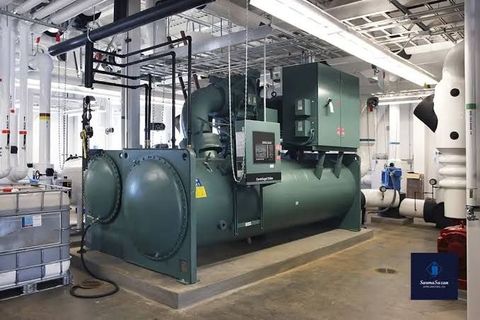
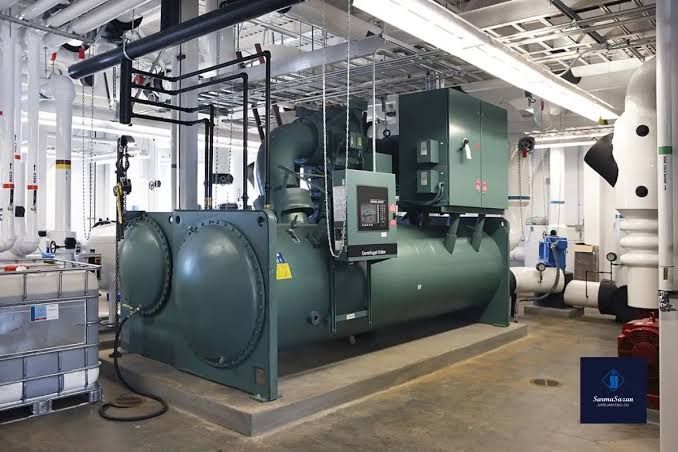
Centrifugal Chillers
These chillers are designed for extremely large cooling capacities.
Applications include:
Airports
Universities
Large hospitals
Industrial campuses
Benefits of Industrial Chillers
Industrial chillers offer several advantages across different industries.
Consistent Temperature Control
Stable temperatures improve product quality and equipment performance.
Increased Equipment Life
Cooling reduces overheating and mechanical stress.
Improved Energy Efficiency
Modern chillers consume less energy than older cooling systems.
Better Production Quality
Many manufacturing processes require accurate temperature control.
Lower Downtime
Reliable cooling minimizes unexpected shutdowns.
Environmental Improvements
New refrigerants reduce environmental impact while improving efficiency.
Limitations of Industrial Chillers
Despite their benefits, industrial chillers also have limitations.
High initial investment
Installation requires planning
Regular maintenance is necessary
Energy consumption varies by design
Water-cooled systems require additional infrastructure
Improper sizing reduces efficiency
Understanding these factors helps users select suitable systems.
Key Features to Consider
When evaluating industrial chillers, consider the following features.
Cooling Capacity
Measured in tons or kilowatts, cooling capacity should match the application's heat load.
Energy Efficiency
Look for systems designed to reduce electricity consumption.
Important indicators include:
High COP (Coefficient of Performance)
High IPLV ratings
Variable-speed compressors
Temperature Accuracy
Industrial processes often require precise cooling.
Some industries need temperature control within one degree.
Smart Controls
Modern chillers may include:
Remote monitoring
Touchscreen interfaces
Automatic diagnostics
Cloud connectivity
Building management integration
Refrigerant Type
Environmentally friendly refrigerants are increasingly important due to changing environmental regulations.
Reliability
Choose equipment designed for long operating hours with proven reliability.
Maintenance Accessibility
Easy access to filters, compressors, pumps, and control panels simplifies servicing.
Latest Trends in Industrial Chillers
Industrial cooling technology continues to evolve.
Variable-Speed Compressors
Compressors automatically adjust cooling output to reduce energy use.
Smart Monitoring
IoT-enabled systems allow operators to monitor performance remotely.
Benefits include:
Predictive maintenance
Fault alerts
Energy tracking
Reduced downtime
Low-GWP Refrigerants
Manufacturers are introducing refrigerants with lower Global Warming Potential (GWP).
AI-Based Energy Optimization
Artificial intelligence helps optimize cooling based on real-time demand.
Heat Recovery Systems
Some chillers reuse waste heat for:
Water heating
Space heating
Industrial processes
This improves overall efficiency.
Modular Chillers
Multiple smaller chillers work together instead of one large unit.
Advantages include:
Easier expansion
Better redundancy
Improved maintenance flexibility
Industrial Chiller Comparison
Checklist Before Selecting an Industrial Chiller
Use this checklist when evaluating options:
Determine required cooling capacity.
Calculate expected operating hours.
Consider future expansion.
Review available installation space.
Compare energy efficiency ratings.
Evaluate maintenance requirements.
Check refrigerant type.
Consider local climate.
Review operating costs.
Verify warranty and service availability.
Assess compatibility with existing equipment.
Plan for long-term maintenance.
Top Industrial Chiller Manufacturers
Many established companies develop industrial cooling solutions for commercial and industrial applications.
Each manufacturer offers products with different capacities, compressor technologies, efficiency levels, and control systems. Comparing technical specifications, operating costs, and local service support can help identify the most suitable solution for a specific application.
How to Choose the Right Industrial Chiller
Choosing the correct chiller involves evaluating both current and future requirements.
Calculate Cooling Load
Accurate load calculations prevent under-sizing or oversizing.
Consider Installation Environment
Outdoor temperatures influence air-cooled performance.
Compare Operating Costs
Lower purchase price does not always mean lower lifetime cost.
Think Long-Term
Energy-efficient systems often provide savings over many years.
Review Maintenance Requirements
Simpler maintenance reduces downtime.
Evaluate Control Features
Advanced monitoring improves operational efficiency.
Consider Future Expansion
Facilities expecting growth should allow additional cooling capacity.
Maintenance Tips for Industrial Chillers
Regular maintenance improves reliability and efficiency.
Inspect Condensers
Dirty condenser surfaces reduce cooling performance.
Check Refrigerant Levels
Low refrigerant decreases efficiency.
Clean Air Filters
Proper airflow supports efficient cooling.
Monitor Water Quality
Water-cooled systems require regular water treatment.
Inspect Electrical Components
Loose connections may lead to failures.
Verify Sensor Accuracy
Temperature sensors should be calibrated periodically.
Lubricate Moving Parts
Follow manufacturer maintenance schedules.
Monitor Energy Consumption
Unexpected increases may indicate developing issues.
Schedule Preventive Maintenance
Routine inspections reduce emergency repairs.
Common Challenges and Solutions
Frequently Asked Questions
What is the difference between an industrial chiller and an air conditioner?
Industrial chillers cool liquids that remove heat from equipment or buildings, while air conditioners primarily cool indoor air.
Which is more efficient: air-cooled or water-cooled chillers?
Water-cooled chillers generally offer higher efficiency for large facilities, while air-cooled models are often simpler to install and maintain.
How long do industrial chillers last?
With proper maintenance, many industrial chillers operate reliably for 15 to 25 years or more, depending on usage and operating conditions.
Are industrial chillers suitable for residential use?
Most industrial chillers are designed for commercial and industrial applications. However, chilled water systems may be used in large residential buildings or specialized homes with central cooling requirements.
How often should maintenance be performed?
Basic inspections should be carried out regularly, with comprehensive preventive maintenance scheduled according to the manufacturer's recommendations, often every six to twelve months.
What factors affect energy consumption?
Cooling load, compressor type, ambient temperature, maintenance practices, refrigerant condition, and operating hours all influence energy use.
Can industrial chillers operate continuously?
Yes. Many industrial chillers are designed for continuous operation, especially in manufacturing facilities, hospitals, and data centers where uninterrupted cooling is essential.
Conclusion
Industrial chillers are essential cooling systems that support homes with centralized cooling, commercial buildings, and a wide range of manufacturing facilities. By removing excess heat from equipment and processes, they help maintain stable temperatures, improve operational efficiency, and support reliable performance across many industries.
Selecting the right chiller involves understanding cooling requirements, evaluating installation conditions, comparing energy efficiency, and considering long-term maintenance needs. Air-cooled, water-cooled, absorption, scroll, screw, and centrifugal chillers each offer advantages for different applications, making it important to match the system to the intended use.
As cooling technologies continue to evolve with smart controls, energy-efficient compressors, environmentally friendly refrigerants, and predictive maintenance capabilities, industrial chillers are becoming more adaptable and sustainable. Taking the time to assess system requirements, follow recommended maintenance practices, and monitor performance can help maximize efficiency, reduce operating costs, and extend equipment life over the long term.
Complete Guide to Industrial Chillers for Homes, Buildings, and Manufacturing Facilities